Then & Now: How Kids Learn (or Don’t Learn) About Money
I do remember sitting in a high school classroom being taught how to budget and how to do an income tax form. But probably the best way I learned how to budget and watch how money is spent was by watching what my parents did. Not because it was formally taught by them, but because it was lived.
As a young girl, I learned about money by trailing behind my mother as she walked the grocery aisles, her list folded neatly in her hand as she checked off each item. She also used to use a little red adder with white clicker buttons. Does anyone remember these? I always thought it was so neat watching her click away as she added up her groceries before she got to the checkout, so she knew what she was spending.
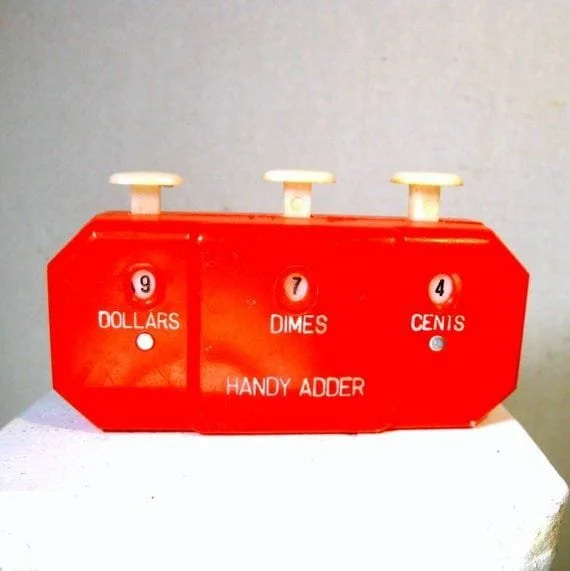
Handy Adder
I always thought this was so cool when my mom used this to add up her groceries
Back then, in the 60s and 70s, money lessons happened quietly. They lived in kitchen conversations, in envelopes marked “hydro”, “groceries," " phone,” and “mortgage,” in the sound of coins counting out on the table before a trip to the corner store. Saving wasn’t a concept — it was a way of life, as natural as making toast in the morning or hanging laundry on the line.
When I was a child, groceries felt precious. Every loaf of bread, every carton of milk had a purpose. Leftovers were reinvented, not discarded. Soup came from whatever we had, not whatever we craved. And somehow, in all of that careful stretching, we never felt deprived. As a child, if my parents were worried about money, I never knew it. I think they had a grasp of what they could spend and what they needed to save by being aware of where their money went.
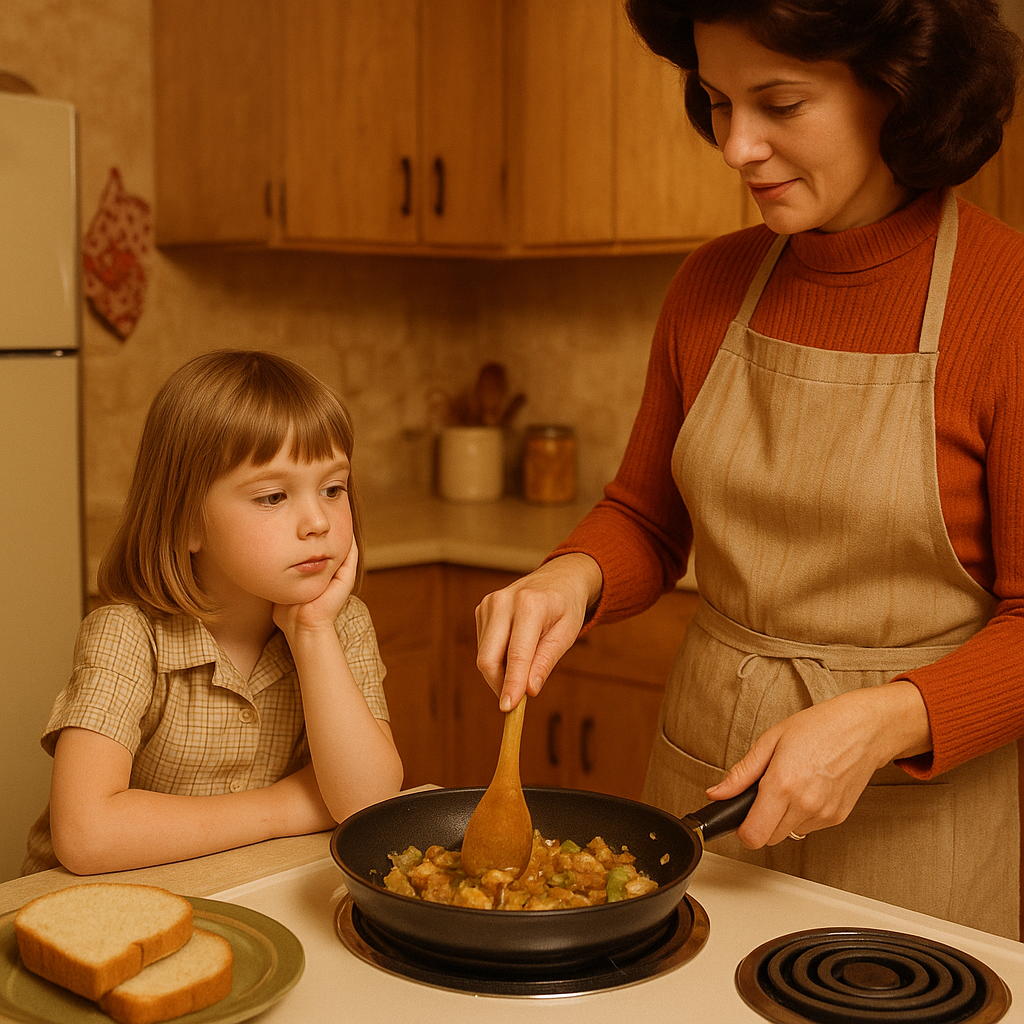
Kids learn by watching
How you save money is what your kids will learn to do
Fast forward to today, and the way children experience money feels almost unrecognizable.
A swipe of a card, a tap of a phone, groceries delivered without ever seeing the total climb on the screen. Many children have never watched their parents count out change or decide between two brands based on price per ounce. The physicality of money — the feeling of handing it over and watching it disappear — has faded into numbers on a screen.
And with that, something important has softened too.
Not because children care less. But because the world has made it easier to separate spending from consequence.
When I raised my own four children on one income, every dollar had a job. Grocery lists were followed, clothing handed down was used with appreciation, meals were cooked every day, bills were paid on time so interest didn’t accrue, and receipts were scanned to ensure they matched the credit card bill. School lunches were homemade, juice was watered down to make it last longer, and shoes were cleaned and well-kept as much as possible so a younger sibling could use them.
I didn’t call it budgeting. We never actually used a budget on paper. We just watched what we were doing every day.
My children learned without being told. They watched how we planned for back-to-school shopping. They saw me pay the utility bills every month. They understood that eating out was a treat, not a weekly habit. They didn’t just hear their father and me talk about money—they watched us live it.

Let your kids see what you do
Have your kids help plan meals and grocery shop for those items
Are kids being taught in school today about money, about planning financially for their future, how to save, how to invest money? Because knowing about money and knowing how to live with money are two very different things.
What seems to be missing isn’t information.
It’s involvement.
Children aren’t often invited into the gentle realities of household finances. We protect them, thinking we are keeping them worry-free, but in doing so, we sometimes remove the very experiences that teach them resilience, patience, and wisdom.
There is something powerful about watching a parent choose intention over impulse.
There is something grounding about learning that not every desire must become an immediate purchase.
And there is comfort in understanding that planning is not restrictive — it is freeing.
So perhaps the lesson today isn’t that children need more financial apps or formal instruction. Perhaps they need what we had all along:
A spot at the kitchen table.
A role in grocery planning.
A small envelope with their name on it.
A savings goal, even if it’s for something simple.
Because when children see how calm responsibility looks, they grow into adults who understand that money isn’t about fear — it’s about care.
And maybe, just maybe, the most valuable financial education still begins where it always has...
Right beside someone who loves them, showing them how to stretch a dollar and a life with kindness.